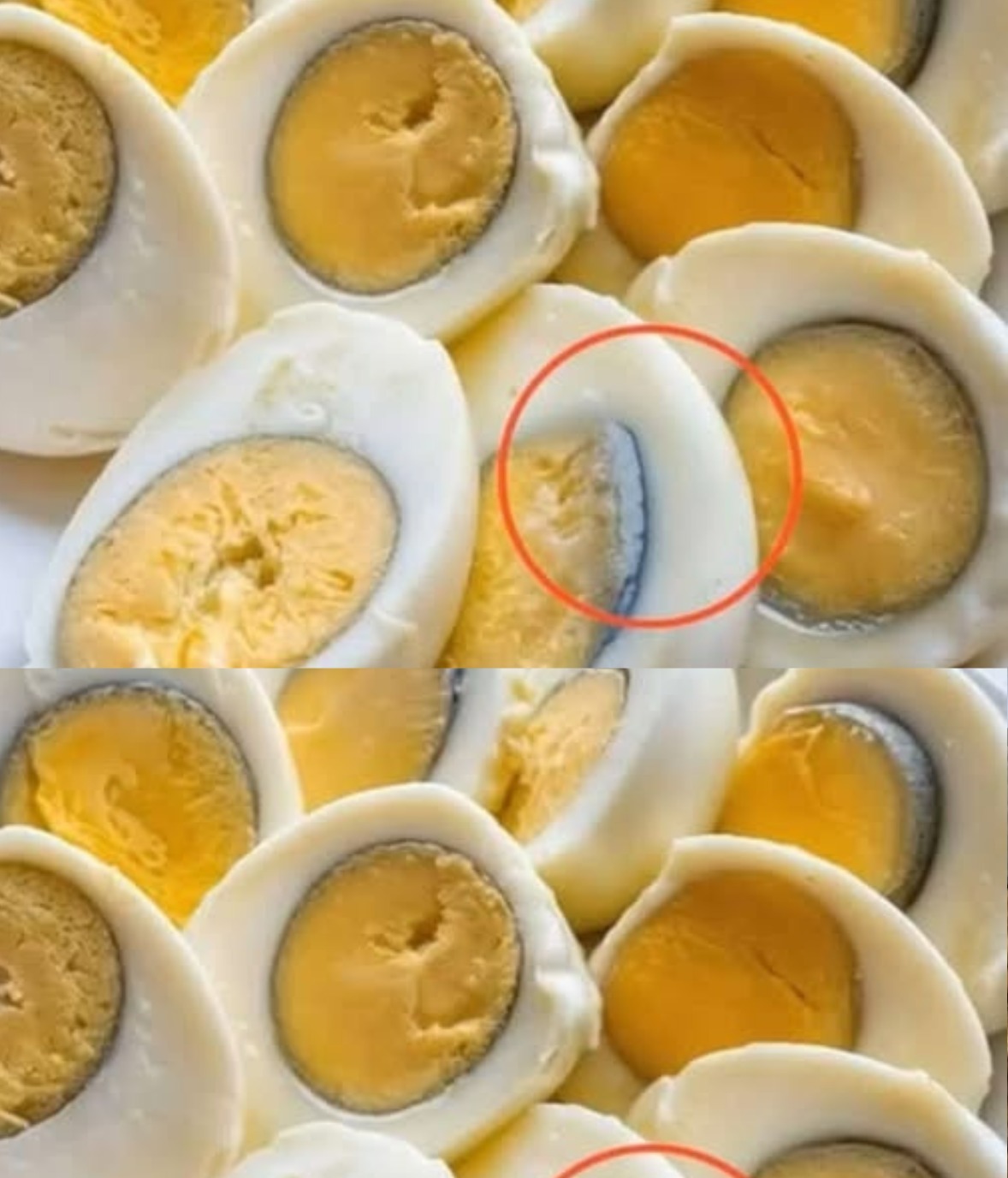
That greenish tint around the yolk is caused by a harmless reaction between sulfur in the egg white and iron in the yolk .
When eggs are overcooked or cooked at too high heat , these two elements combine to form ferrous sulfide — which gives off that telltale greenish-gray color.
Think of it like rust forming inside the egg — not pretty, but completely safe!
This reaction is more noticeable when:
- Eggs are boiled too long
- They’re left in hot water after cooking
- Older eggs are used (they have a higher pH level)
🟢 Is It Safe to Eat?
Yes — 100% safe!
The green ring may look odd, but it’s not harmful and doesn’t affect the flavor much either. It’s just a visual quirk from overcooking.
However, if your eggs smell strongly of sulfur or look slimy, then they’ve gone bad — and that’s a different issue entirely.
⏱️ How to Prevent the Green Ring
Want picture-perfect, golden-centered hard-boiled eggs every time? Here’s how:
✅ Don’t Overcook
Stick to a gentle simmer instead of a rolling boil. Cook eggs just until set — usually 9–12 minutes is enough depending on size.
✅ Cool Them Fast
Once done, immediately transfer the eggs to a bowl of ice water and let them sit for 5–10 minutes. This stops the cooking process and prevents residual heat from causing the green ring.
✅ Use Fresh Eggs
Older eggs are more likely to develop the green layer due to changes in internal chemistry. For best results, use eggs within a week or two of purchase.
✅ Peel Right Away (If Serving Cold)
Peeling while still warm helps reduce moisture buildup and improves appearance.
🍳 Bonus Tips for Perfect Hard-Boiled Eggs
- Use a timer — no guessing!
- Don’t boil directly from fridge temp — let eggs come to room temperature first.
- Gently tap before peeling — makes shell easier to remove.
- Store peeled eggs in water in the fridge to keep fresh.