Who Should Be Cautious?
While left-side sleeping is beneficial for most people, certain individuals should exercise caution:
-
Those with congestive heart failure – Some patients report increased discomfort on the left side; follow your cardiologist's advice
-
People with shoulder injuries – Side sleeping can aggravate rotator cuff issues; use extra pillow support
-
Anyone with specific surgical history – Recent chest or abdominal surgery may make side sleeping temporarily uncomfortable
When in doubt, ask your doctor. They know your specific health history.
A Note on Pregnancy
If you're pregnant, this message is for you: sleep on your left side.
After the first trimester, sleeping on your back can compress the vena cava, reducing blood flow to your heart and your baby. Sleeping on your right side is safer than back but still slightly compresses this vessel. Left side is optimal.
The American College of Obstetricians and Gynecologists recommends left-side sleeping for pregnant individuals. Use pillows behind your back and between your knees for comfort.
The Bigger Picture: Sleep as Health Practice
Changing your sleep position won't cure disease or replace medical treatment. But it's a perfect example of how small, consistent adjustments can support your body's natural processes.
Think of it this way: you're already spending 6-9 hours in bed tonight. Why not spend those hours in a position that helps—not hinders—your digestion, circulation, and waste removal?
It costs nothing. It requires no pills, no equipment, no special diet. Just a gentle shift in how you rest.
That's the kind of health advice we can all use.
Your Sleep Position Questions, Answered
Can I sleep on my left side if I have shoulder pain?
Yes, but use extra pillow support. A pillow thick enough to fill the space between your shoulder and ear prevents neck strain. A body pillow hugged to your chest can also reduce shoulder pressure.
What if I wake up on my back every morning?
Totally normal. Most people change positions 10-30 times per night. The goal isn't perfection—it's spending more time on your left than you otherwise would.
Does this help with snoring?
Side sleeping (either side) is generally better for snoring than back sleeping, which allows the tongue and soft palate to collapse into the airway. Left side specifically hasn't been shown superior to right for snoring, but both beat back.
Is left-side sleeping safe for everyone?
For the vast majority, yes. As noted above, those with specific heart conditions should follow their doctor's guidance. Otherwise, it's considered safe and beneficial.
Can I train myself to sleep on my left side?
Absolutely. Use the pillow techniques above. Some people sew a tennis ball into the back of a pajama shirt to prevent back sleeping. Within a few weeks, your body adapts.
The Bottom Line
Sleep isn't just rest—it's active recovery. Your body is working while you dream, and the position you choose influences how efficiently that work gets done.
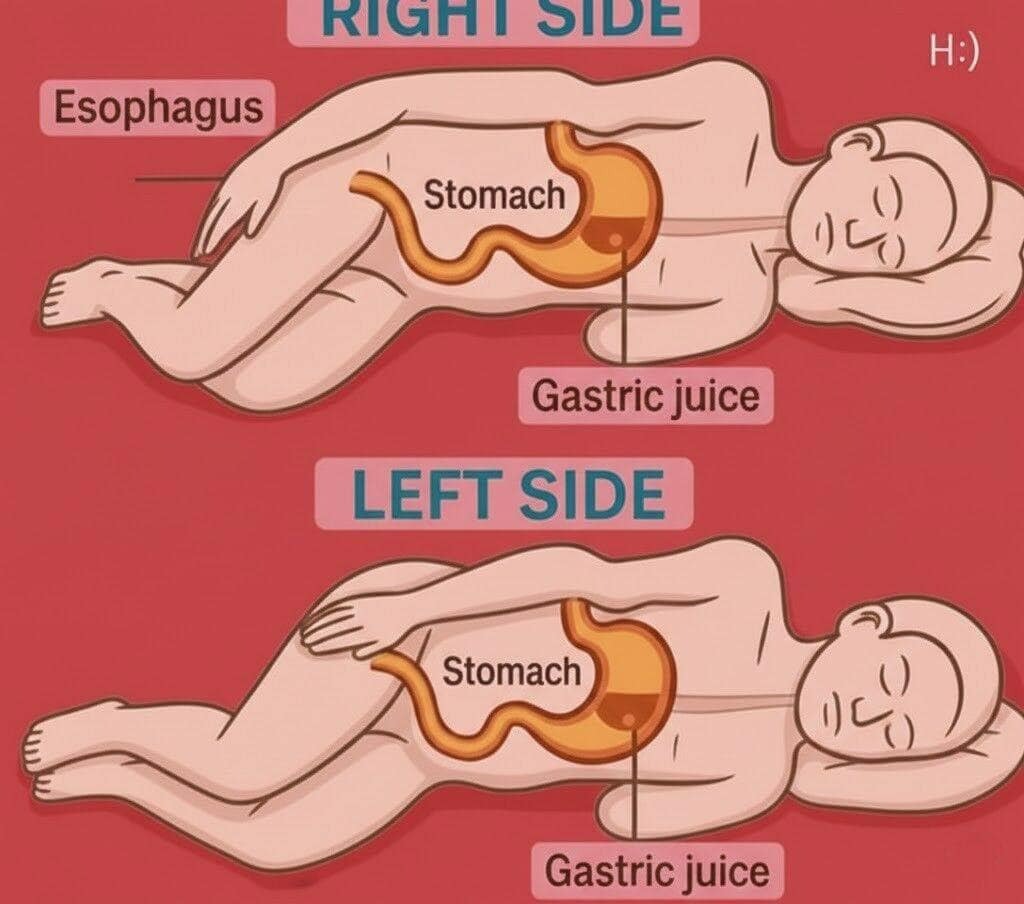
Left-side sleeping offers gentle, gravity-assisted support for:
-
Digestion and acid reflux prevention
-
Lymphatic drainage and toxin removal
-
Circulation, especially during pregnancy
-
Spleen and immune function
It's simple. It's free. And it might just help you wake up feeling more refreshed than you have in years.
Tonight, when you settle into bed, try turning onto your left side. Give it a week. See how you feel.
Your body spends all day working for you. At night, let it work with you.