-
- Gently pop off the small stem nub at the top of the avocado.
-
- Bright green underneath? → Perfectly ripe and fresh.
- Brown underneath? → May be overripe—but still safe to eat (check flesh).
- Hard to remove or dry? → Likely underripe or past its prime.
✅ This works 90% of the time—and beats squeezing!
✅ Skin & Firmness Guide
|
Color/Feel
|
What It Means
|
Can You Eat It?
|
|---|---|---|
|
Bright green, firm
|
Underripe
|
✅ Yes—just wait 2–5 days
|
|
Deep green/purple, yields slightly to gentle palm pressure
|
Perfectly ripe
|
✅ Eat today!
|
|
Very soft, squishy, or dented
|
Overripe
|
✅ Usually yes—great for guacamole or smoothies
|
|
Black, mushy, or leaking
|
Likely spoiled
|
❌ Toss if foul-smelling or slimy
|
🚫 Never judge by color alone—Hass avocados turn dark when ripe; green-skinned varieties (like Fuerte) stay green.
Fruits & Vegetables
🔪 Step 2: What to Do When You Cut It Open
Even if the outside looks good, the inside may surprise you. Here’s how to assess it:
✅ Safe & Edible (Don’t Toss!)
-
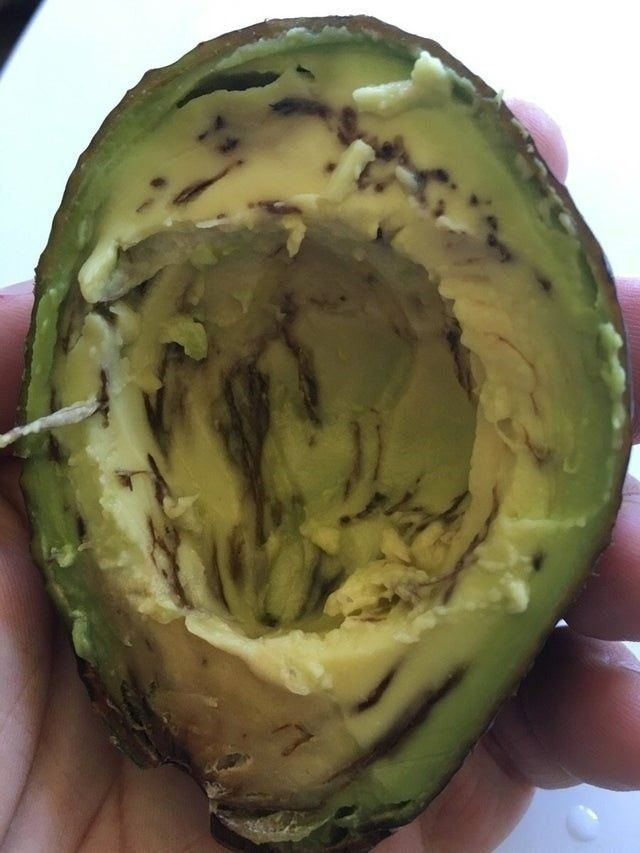
- Light brown spots or streaks: Caused by oxidation or minor bruising. Scrape off or blend in—perfectly fine.
-
- Stringy fibers: More common in large or mature fruit. Not harmful—just less creamy. Best for sauces or baking.
- Slightly soft flesh: Ideal for guacamole, smoothies, or avocado toast.
❌ Spoiled—Throw It Away
-
- Dark, slimy, or mushy flesh throughout
- Sour, rancid, or “chemical” smell (not just earthy)
- Mold (fuzzy white, green, or black patches)—do not cut around it! Avocado’s high moisture lets mold spread invisibly.
💡 Pro Tip: A bitter taste = rancid fats. Spit it out and compost the rest.
🥣 How to Rescue “Not-Perfect” Avocados
Don’t waste that $3 fruit! Transform it based on its state: