-
On the scalp → testosterone may contribute to hair thinning.
-
In the ears and nose → it can stimulate thicker hair growth.
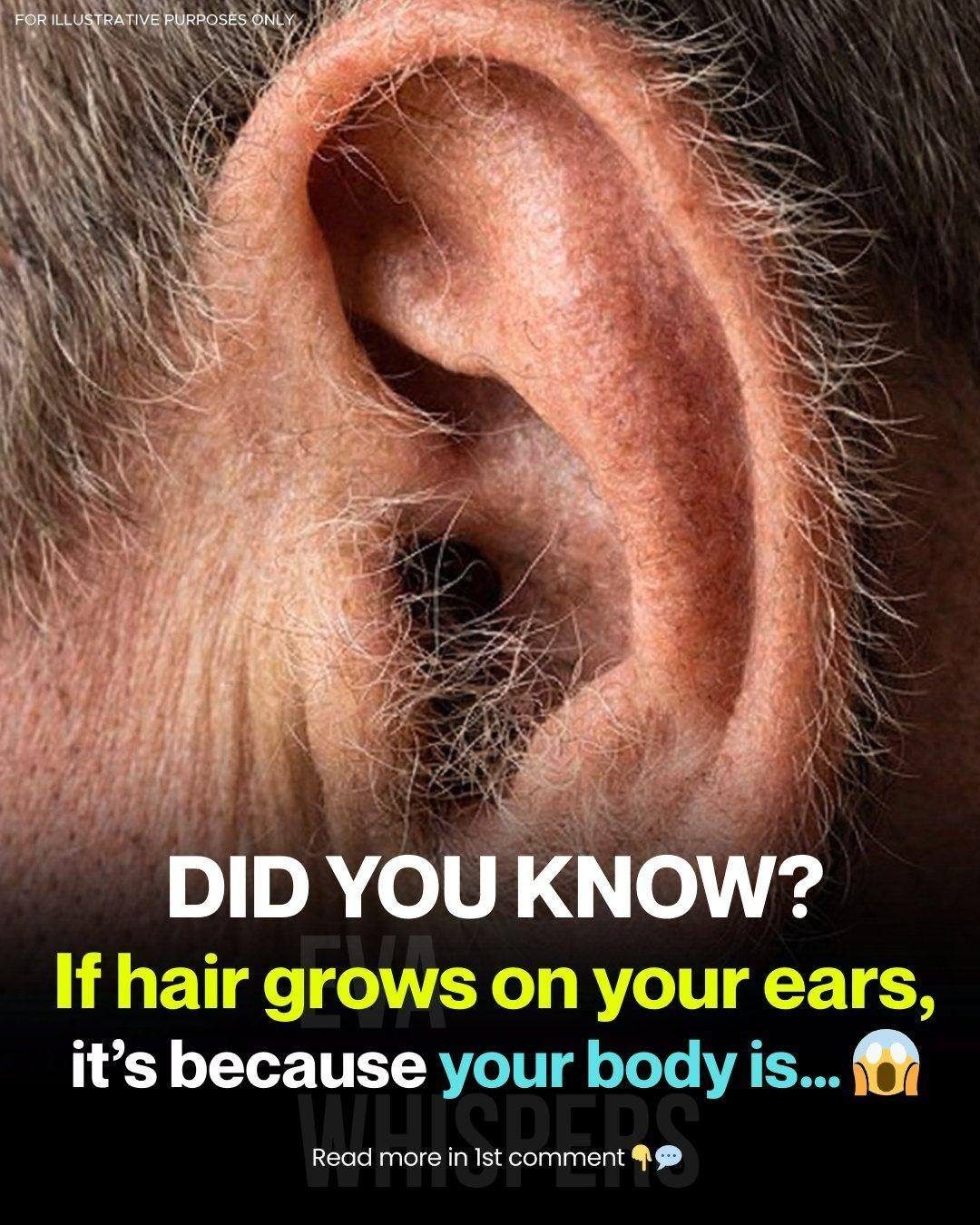
This is why many older men experience increased hair growth in these areas.
2. Changes in Hair Growth Cycles
Hair grows in cycles: growth, rest, and shedding.
With age, certain follicles may stay longer in the growth phase. That’s why ear hair can become longer, thicker, and more noticeable over time.
3. Genetics Matter Most
If your father or grandfather had noticeable ear hair, chances are you will too.
Genetics determine:
-
Hair follicle sensitivity
-
Growth pattern
-
Thickness
-
Growth speed
For most men, ear hair growth is simply inherited.
Does Ear Hair Indicate a Health Problem?
In most cases, no.
Ear hair is usually harmless and part of normal aging.
However, sudden and extreme hair growth — especially combined with other unusual symptoms — should be discussed with a healthcare professional.
What About Heart Disease Claims?
Continued on next page: